

Ozone Hole Over Antarctica Became the Largest in the Past Decade
In 2026, the ozone hole over Antarctica became the seventh largest in 48 years of observations due to unusual weather. Scientists believe the ozone layer will recover by the 2070s.
Scientists from NOAA and NASA linked the unusually large size of the ozone hole to a powerful polar vortex, which maintained conditions for ozone depletion longer than usual. At its seasonal peak from September 7 to October 13, the average area of the hole was about 9.6 million square miles (25 million square kilometers)—more than twice the area of the United States.
The hole reached its maximum size on September 18 at 10.5 million square miles (27.1 million square kilometers). This is about 90% of the historical record set on September 9, 2000.
The polar vortex was larger than usual due to the weak influence of atmospheric systems that typically disrupt its circulation. As a result, strong winds remained farther from the South Pole, and the zone with conditions suitable for ozone loss expanded.

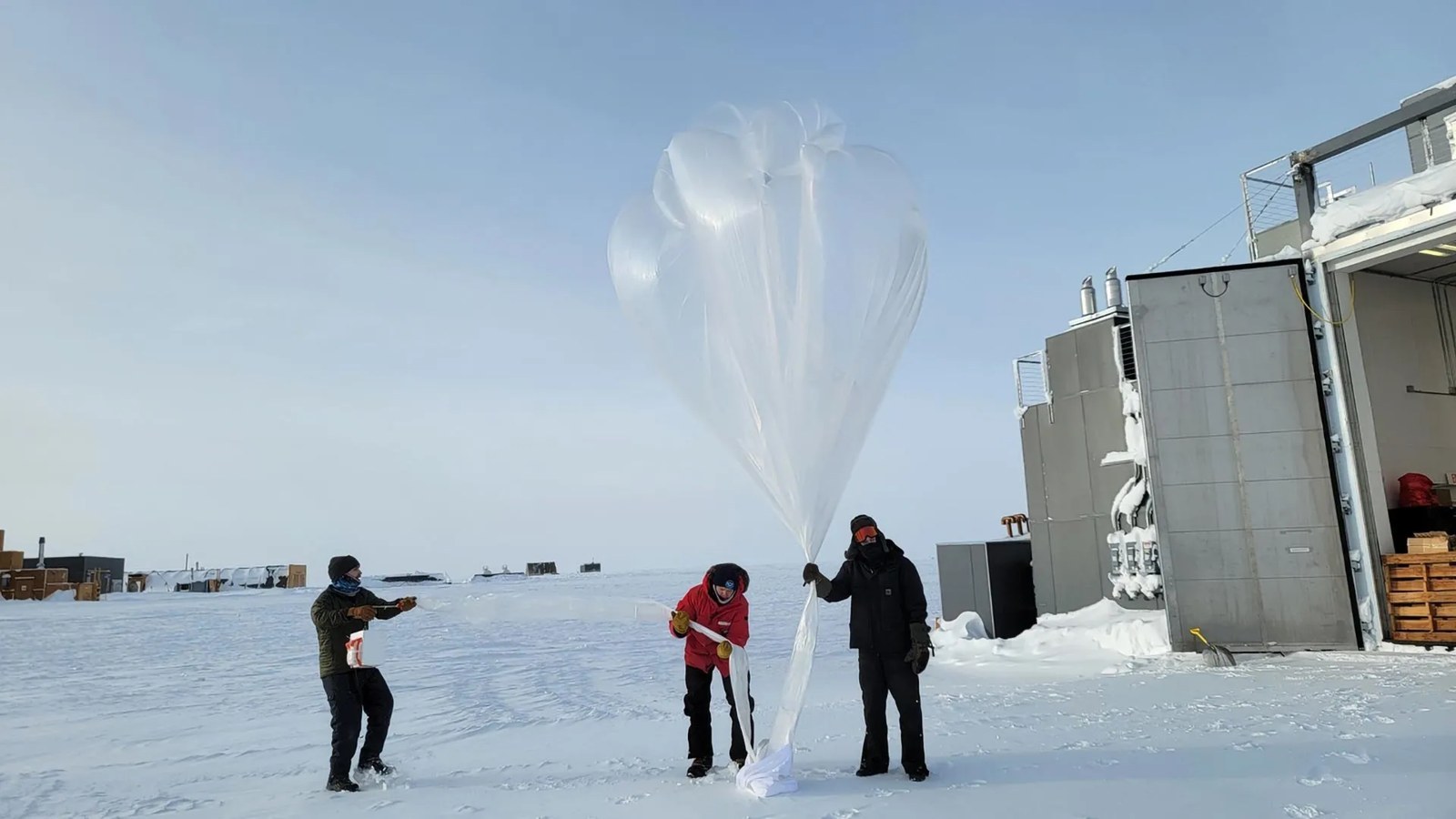
However, ozone levels did not decline as sharply as during record-breaking episodes 10 or 20 years ago. Observations using instruments on weather balloons and the Dobson spectrophotometer showed that the minimum concentration directly over the South Pole reached 105 Dobson units.
NOAA and NASA satellites also participated in monitoring the state of the ozone layer. Scientists note that restrictions on ozone-depleting substances continue to support long-term recovery. The level of chlorine associated with such substances in the Antarctic stratosphere has decreased by about a third compared to peak values in the 1980s, and old compounds can persist in the atmosphere for decades.